Passive solar windows are one of the most important design elements in a climate-responsive home. They bring in daylight, frame views, collect useful winter sun, affect indoor comfort, and influence heating and cooling demand throughout the year.
But passive solar window design is not simply about adding more glass. In many homes, too much glazing creates glare, overheating, heat loss, privacy problems, and uncomfortable rooms. A successful window strategy depends on the right balance between orientation, window size, glazing performance, shading, thermal mass, insulation, and climate.
The goal is not to maximize glass area. The goal is to place the right windows in the right location, with the right performance, for the specific climate and room use.
This guide explains how to size and place passive solar windows for better comfort, useful daylight, winter heat gain, summer protection, and long-term building performance. For a broader foundation, start with Passive Solar Design Principles and Passive Solar Windows.
Try it on your own design: Window-to-Wall Ratio Calculator (free, about a minute).
What Are Passive Solar Windows?
Passive solar windows are windows that are intentionally placed and sized to support passive heating, daylighting, cooling control, and indoor comfort. They are not just architectural openings. They are part of the building’s environmental strategy.
In a passive solar home, windows can help:
- collect winter solar heat
- provide useful daylight
- reduce artificial lighting demand
- connect indoor spaces with outdoor views
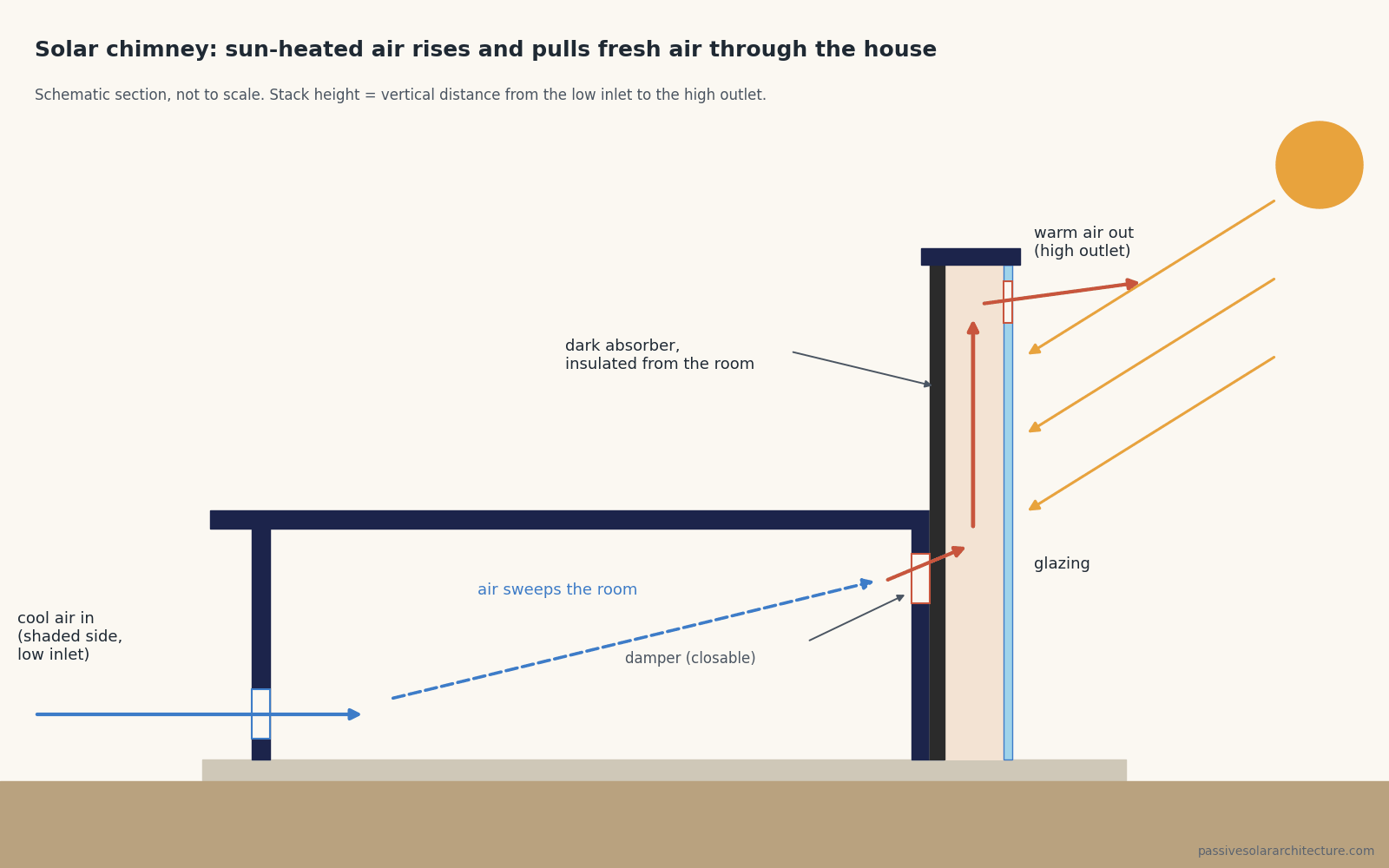
- support natural ventilation when operable
- control overheating when combined with shading
- improve seasonal comfort when paired with thermal mass
However, windows are also weak points in the building envelope. Compared with insulated walls, windows usually lose more heat in winter and admit more unwanted heat in summer. That is why passive solar windows must be designed carefully.
If you are new to the topic, read Passive Solar Design: A Beginner’s Guide before making early design decisions.
The Main Rule: Window Design Depends on Climate
There is no universal window size that works for every passive solar home. The best window strategy changes depending on climate.
| Climate Type | Main Window Goal | Main Risk | Design Priority |
|---|---|---|---|
| Cold climate | Capture useful winter sun | Heat loss at night | Equator-facing glazing, high-performance windows, thermal mass |
| Temperate climate | Balance solar gain and daylight | Seasonal overheating | Moderate glazing, shading, ventilation |
| Hot-dry climate | Control heat while allowing daylight | Excess solar gain | External shading, limited west glass, night cooling |
| Hot-humid climate | Reduce heat gain and support airflow | Overheating and humidity | Shaded openings, cross-ventilation, limited solar gain |
| Mixed climate | Work in both heating and cooling seasons | Wrong balance between winter gain and summer heat | Climate-specific glazing, seasonal shading, careful sizing |
In cold climates, solar-facing windows can reduce heating demand when they are combined with thermal mass and insulation. In hot climates, the same window area may cause overheating unless it is shaded, reduced, or repositioned. In mixed climates, the design must do both: collect useful sun in winter and block unwanted heat in summer.
For a deeper climate-based design framework, read Passive Solar Design by Climate and browse the Climate Guides for Passive Solar Design.
Best Placement for Passive Solar Windows
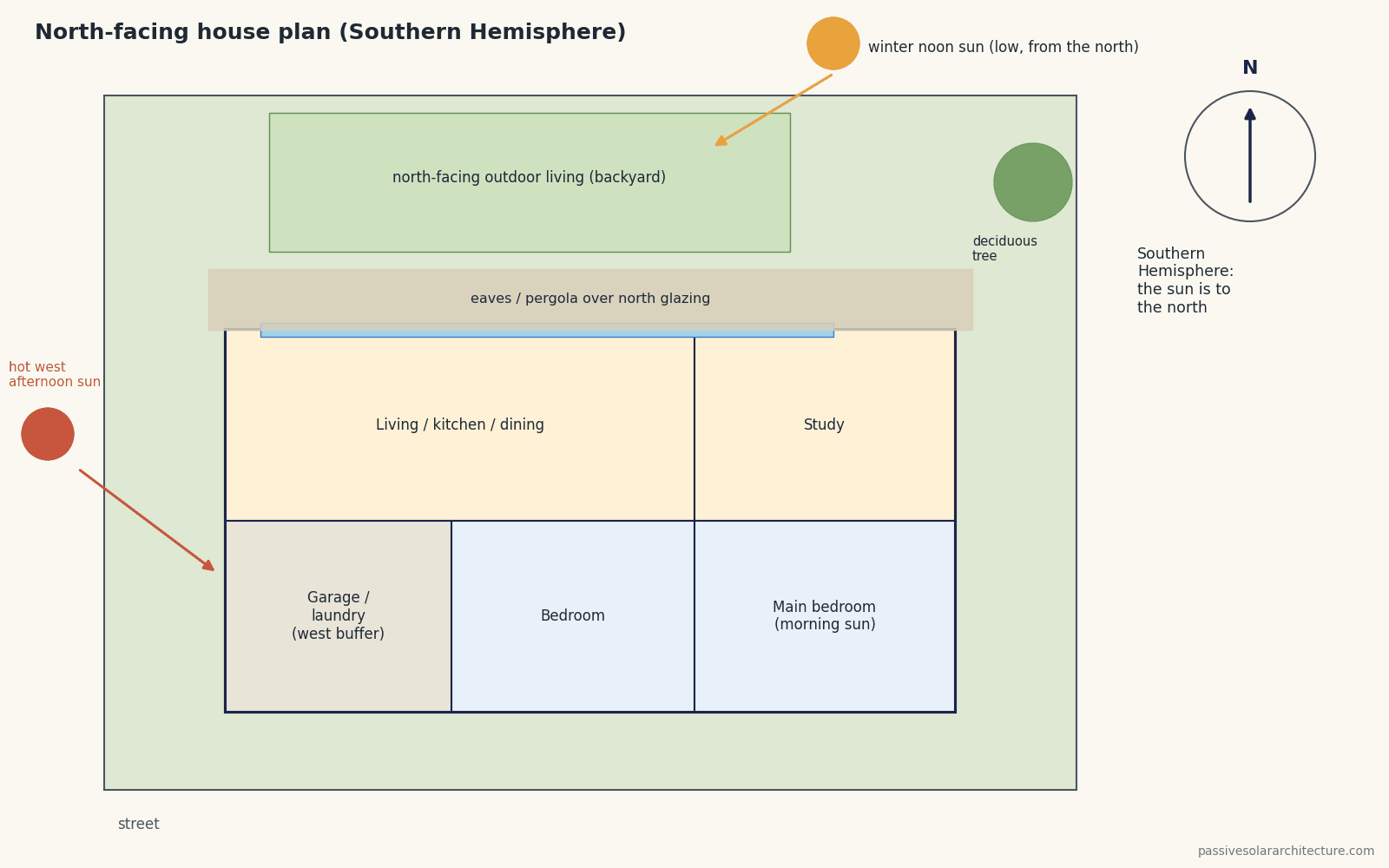
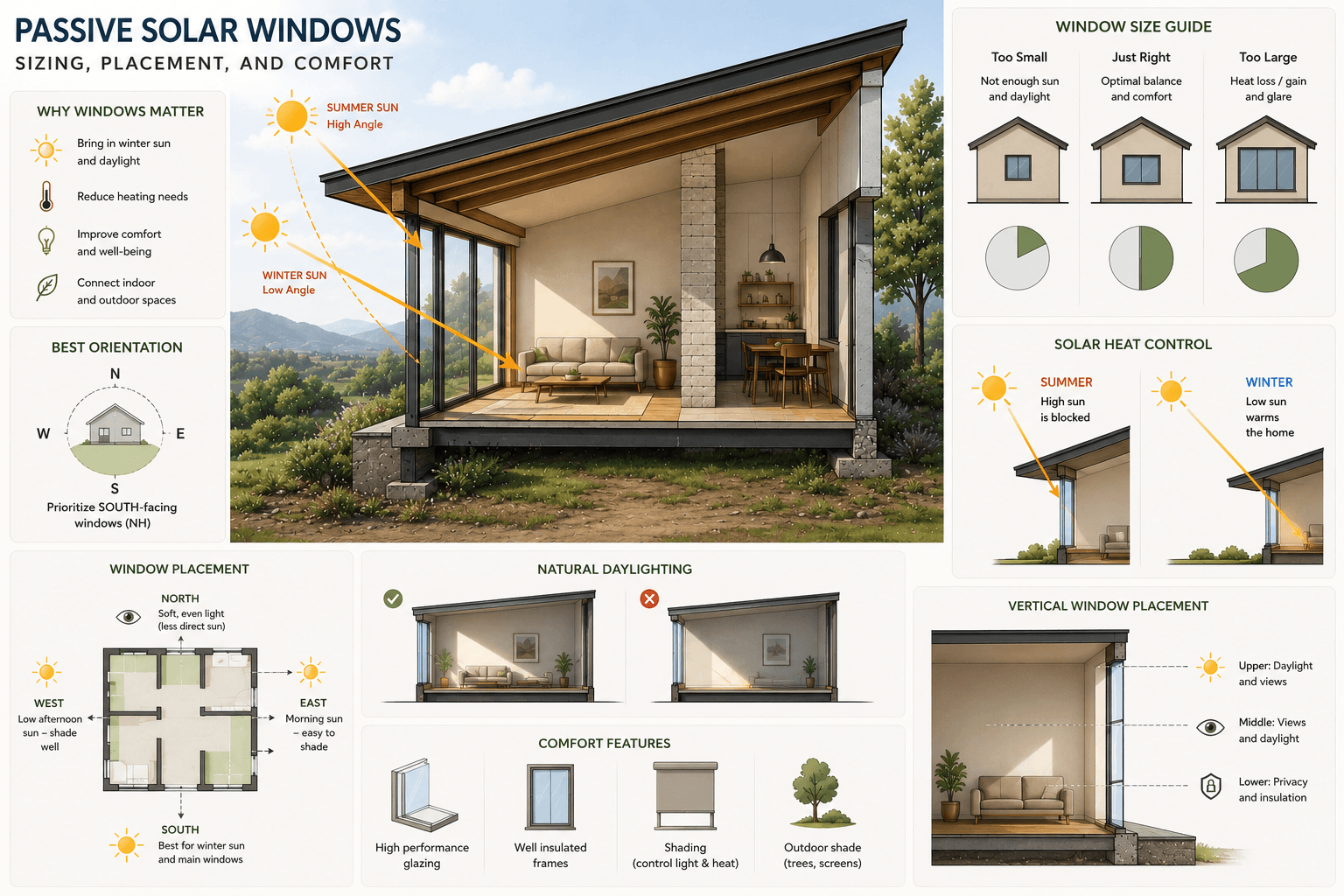
The most important placement rule is to orient the main solar-gain windows toward the equator.
In the Northern Hemisphere, this usually means south-facing windows. In the Southern Hemisphere, this usually means north-facing windows. For a global passive solar site, the more accurate term is equator-facing glazing.
| Window Orientation | Passive Solar Role | Comfort Risk | Best Use |
|---|---|---|---|
| Equator-facing | Winter solar gain and strong daylight | Overheating if not shaded | Main living areas, sunny rooms, thermal mass zones |
| East-facing | Morning light | Early heat gain in warm climates | Kitchens, breakfast areas, bedrooms with shading |
| West-facing | Afternoon light and views | High overheating and glare risk | Limited glazing, vertical shading, screened openings |
| Pole-facing | Soft daylight and low direct solar gain | Heat loss in cold climates | Studios, utility spaces, controlled daylight areas |
Equator-facing windows are usually easier to control because the summer sun is higher and the winter sun is lower. This makes it possible to use roof overhangs or horizontal shading to block high summer sun while allowing lower winter sun to enter.
East and west windows are more difficult. Low-angle sun from the east and west can enter deeply into rooms and is harder to block with simple horizontal overhangs. West-facing glass is especially risky because it receives afternoon sun when outdoor temperatures are often higher.
For orientation strategy, read Passive Solar Orientation, Solar Orientation for Passive Solar Homes, and Passive Solar Window Placement.
Passive Solar Window Sizing: How Much Glass Is Enough?
Passive solar window sizing should start with comfort, not appearance. A house does not become more passive solar simply by adding more glass. In fact, excessive glazing is one of the most common passive solar mistakes.
Window size should respond to:
- climate zone
- solar orientation
- room function
- available thermal mass
- window performance
- shading design
- daylight needs
- privacy and views
- heating and cooling priorities
In passive solar design, solar-facing glass and thermal mass must be considered together. If the design has more solar gain than the home can absorb and store, rooms may overheat. If the design has too little glazing, the home may not receive enough daylight or winter solar benefit.
Use Window-to-Wall Ratio Calculator to test early glazing options before the design becomes fixed. You can also use the Passive Solar Orientation Calculator and Solar Angle Calculator to understand how orientation and sun angles affect window performance.
Passive Solar Windows and Thermal Mass
Thermal mass is essential when passive solar windows are used for heating. Sunlight entering through windows creates heat gain. Thermal mass helps absorb, store, and slowly release that heat.
Common thermal mass materials include:
- concrete slabs
- brick walls
- stone floors
- adobe
- rammed earth
- tile over concrete
- water-based storage elements
The important point is placement. Thermal mass should be inside the insulated envelope and exposed to useful solar gain or indoor air movement. A heavy material hidden behind carpet, furniture, insulation, or finishes may not perform as expected.
Without enough thermal mass, large solar-facing windows can make a room warm during sunny hours and cold after sunset. With appropriate thermal mass, indoor temperatures can become more stable and comfortable.
For more guidance, see Thermal Mass, Thermal Mass Calculator, and Passive Solar Materials.
Glazing Performance: SHGC, U-Value, and Comfort
Window performance matters as much as window size. Two important terms are SHGC and U-value. Our SHGC guide covers the solar side in detail.
SHGC: Solar Heat Gain Coefficient
SHGC describes how much solar heat passes through a window. A higher SHGC allows more solar heat gain. A lower SHGC blocks more solar heat.
In colder climates, higher SHGC may be useful on equator-facing windows where winter solar gain is desirable. In warmer climates, lower SHGC may help reduce overheating. However, the best value depends on orientation, shading, climate, and room use.
U-Value
U-value measures heat transfer through the window. A lower U-value usually means better insulation and less heat loss.
In cold climates, low U-value windows are especially important because windows can lose significant heat at night and during cloudy periods. In hot climates, good glazing also helps reduce unwanted heat transfer from outside to inside.
Visible Light Transmittance
Visible light transmittance, or VLT, describes how much visible light passes through the glass. Higher VLT can improve daylight, but too much brightness without shading can create glare.
A good passive solar window strategy balances SHGC, U-value, daylight, shading, and comfort instead of choosing glass based on one number alone.
For the broader house-design context, read Passive Solar House Design and Passive Solar House Design: What Matters Most.
Window Placement by Room Type
Passive solar windows should be placed according to how each room is used during the day.
| Room Type | Preferred Window Strategy | Comfort Notes |
|---|---|---|
| Living room | Larger equator-facing windows where climate allows | Use shading and thermal mass to avoid overheating |
| Kitchen | Moderate daylight, often east or equator-facing | Control heat from cooking and morning sun |
| Bedroom | Moderate windows with privacy and ventilation | Avoid west overheating in warm climates |
| Home office | Balanced daylight with glare control | Avoid direct sun on screens |
| Bathroom | Small, private, well-ventilated openings | Prioritize moisture control |
| Utility or storage | Small windows or none, depending on climate | Useful buffer spaces on colder or hotter sides |
Living rooms and dining areas often benefit most from passive solar windows because they are occupied during the day and can use daylight and winter sun. Bedrooms need more caution because overheating at night can reduce sleep comfort. Home offices need daylight without glare, especially where computer screens are used.
If you are planning the whole layout, use the Passive Solar Design Checklist to review orientation, room placement, glazing, shading, and thermal mass together.
Shading Is Part of Window Design
A passive solar window is incomplete without a shading strategy. Shading should be designed at the same time as window size and placement, not added later as a correction.
Useful shading options include:
- roof overhangs
- exterior louvers
- vertical fins
- pergolas
- shutters
- solar screens (affiliate link)
- deciduous trees
- balconies and recessed openings
- deep window reveals
Exterior shading is usually more effective than interior blinds because it blocks solar heat before it enters the building. Interior blinds can reduce glare, but much of the heat has already passed through the glass.
Horizontal overhangs are most effective for equator-facing windows. Vertical shading and adjustable screens are often better for east and west-facing windows because the sun angle is lower.
For design support, visit Passive Solar Shading & Overhangs and use the Roof Overhang Calculator. You can also review Passive Solar Calculators & Tools for other early-stage design checks.
Passive Solar Windows and Summer Comfort
One of the biggest misconceptions about passive solar design is that it is only about winter heating. A passive solar home must also be comfortable in summer.
Summer comfort depends on:
- blocking unwanted direct sun
- reducing west-facing heat gain
- using external shading
- allowing cross-ventilation where climate allows
- using night ventilation in suitable climates
- choosing appropriate glazing performance
- avoiding excessive glass area
- balancing thermal mass with cooling strategy
In hot-dry climates, thermal mass can support comfort if nights are cool enough to release stored heat. In hot-humid climates, heavy thermal mass and large glass areas may trap heat if ventilation and shading are not carefully designed.
For additional context, read Passive Solar Heating Explained for Homes and compare passive strategies with active systems in Passive Solar vs Active Solar.
Common Passive Solar Window Mistakes
1. Too Much Glass on the Solar Side
Large windows can look attractive, but more glass is not always better. Oversized solar-facing windows can cause overheating, glare, high cooling demand, and uncomfortable temperature swings.
2. Not Enough Thermal Mass
If solar gain enters the home but there is not enough exposed thermal mass, the heat may not be stored effectively. This can create hot rooms during the day and cold rooms at night.
3. Ignoring West-Facing Windows
West-facing glass is one of the most common sources of overheating. It receives low-angle afternoon sun, which is difficult to shade and often arrives when the building is already warm.
4. Choosing Glass Without Considering Climate
The right SHGC and U-value depend on climate and orientation. A glazing specification that works in a cold region may perform poorly in a hot climate.
5. Relying Only on Interior Blinds
Interior blinds can help with glare and privacy, but they are not always enough to prevent heat gain. Exterior shading is often more effective for comfort.
6. Forgetting Daylight Quality
Passive solar windows should provide useful daylight, not harsh glare. Window height, room depth, surface reflectance, shading, and orientation all affect daylight quality.
7. Treating Windows Separately From the Whole Building
Windows must work with the full design: orientation, shading, thermal mass, insulation, airtightness, ventilation, and room layout.
If you want a broader early-stage overview, start from Start Here or explore the complete learning structure on Learn.
Passive Solar Window Checklist
Before finalizing a passive solar window strategy, review this checklist:
- Have you identified the equator-facing side of the site?
- Are the largest windows placed where they provide useful sun and daylight?
- Is west-facing glazing limited or carefully shaded?
- Does the window area match the climate?
- Is there enough exposed thermal mass for solar-gain areas?
- Are roof overhangs sized for seasonal sun angles?
- Are east and west windows protected with appropriate shading?
- Does the glazing specification match each orientation?
- Will the home be comfortable in both winter and summer?
- Have you checked daylight, glare, privacy, and ventilation together?
For a broader design review, use the Passive Solar Design Checklist.
Practical Summary: How to Design Passive Solar Windows
| Design Decision | Best Practice |
|---|---|
| Main solar windows | Place them toward the equator where climate allows |
| Window size | Balance daylight, solar gain, heat loss, shading, and thermal mass |
| West windows | Limit size and use strong exterior shading |
| Cold climates | Use high-performance glazing and thermal mass for useful winter gain |
| Hot climates | Prioritize shading, low heat gain, and ventilation |
| Mixed climates | Use seasonal shading and avoid excessive glass |
| Comfort | Design for daylight, glare control, temperature stability, and airflow |
Conclusion
Passive solar windows can make a home brighter, warmer in winter, more connected to the outdoors, and more comfortable throughout the year. But they only work well when they are sized, placed, shaded, and specified as part of a complete passive solar design strategy.
The best passive solar windows are not necessarily the largest windows. They are the windows that respond to climate, orientation, room use, thermal mass, and seasonal comfort.
For cold climates, passive solar windows can help capture valuable winter sun. For warm climates, they must be carefully shaded and limited to prevent overheating. For mixed climates, the design must balance both needs.
Before choosing window sizes, test the design with orientation, window-to-wall ratio, solar angle, shading, and thermal mass calculations. Start with the Window-to-Wall Ratio Calculator, Solar Angle Calculator, Roof Overhang Calculator, and Thermal Mass Calculator.
Recommended books and tools
This section contains affiliate links. As an Amazon Associate we earn from qualifying purchases, at no extra cost to you. We only list items that relate to this page; we have not tested specific products.
- The Passive Solar House by James Kachadorian: a practical, builder-oriented guide to designing a sun-heated house with thermal mass. View on Amazon
- Cellular (honeycomb) shades: insulating window coverings that reduce night-time heat loss through glass. Browse on Amazon
- Thermal insulated curtains: a low-cost way to cut heat loss from large south-facing windows at night. Browse on Amazon
Next step: check your own project
Check the glazing on each facade of your design with the Window-to-Wall Ratio Calculator. It is free and runs in your browser.
Keep your results in one place
The free Passive Solar Design Checklist & Project Brief is a printable PDF with pages for your site’s sun angles, orientation, glazing per facade, shading and thermal mass, plus 12 questions to take to your architect or designer.